From The Standard, Kenya
Esther was born in a Nairobi slum, the eldest of five children. When her father died when she was seven, her mother took the family back to the rural area they had come from so that she could set up a vegetable selling business.
Then Esther’s mother died leaving the children to fend for themselves. Esther and her siblings took jobs at the weekends and in school holidays, and as soon as Esther had taken her exams in 2001, at the end of her primary education, she left school.
Determined to earn enough to look after her younger siblings, she accepted an offer of employment back in Nairobi but discovered that she wouldn’t be paid. She left, moved in with a relative and found out about the knitting project.
Lillian was also born in a Nairobi slum. Her parents died within a year of each other and at 14 she found herself head of the family, the eldest of the three siblings. Although they were taken in by an aunt, Lillian had to drop out of secondary school because the fees were too much for her aunt who had three children of her own.
She was helping with her aunt’s business when one day she heard about a place where girls meet and learn to knit.
The scheme is an initiative of the Mathare Mothers’ Development Centre (MMDC). It has eight knitting machines on which it trains girls to knit baby clothes and sweaters. The girls can then sell whatever they produce, marketing their wares being one of their main problems.
Although they have free use of the machines, they have to pay for their materials, for maintenance and repair, and contribute to the rental for the premises. Nevertheless the girls are able to send money home for their siblings’ education and to try to save up for machines of their own.
The MMDC leader, Anne Mbuthia, says that the training programme has had to be put on hold. They have only eight machines and up to a hundred girls wanting to be trained.
Monday, 30 July 2007

Cooking in Saint Savin in the Hautes Pyrénées
Once upon a time I was invited to a school function by a friend. We were in Paris, it was an American school, her husband was away on business, and she didn’t want to go alone.
I really can’t recollect what the occasion was. I have no memory of that at all. What I do remember is that there was a raffle at the end of the evening, and suddenly to my horror, my ticket number was called out.
I had won a week’s cookery course in the Pyrenees and I really felt I was there under false pretences. I tried to give it to my friend but she hated cooking. I had to go.
So in November 1992 off we set to St Savin in the Hautes Pyrénées where we stayed in a tiny hotel called Le Viscos. The deal was that I would be in the kitchens in the morning while my husband played golf, we would have lunch at the hotel, and then spend the afternoon looking around the area. Our evening meal was included too. 
 The pictures are scans of photos taken in 1992, so please excuse the quality.
It turned out I was the only student, so the course became an intensive one. Sadly I don’t remember anything I learnt, but I do remember eating. I don’t think I have ever eaten so much. They even used to give me their version of pain perdu as a mid morning “snack”, just to keep me going between meals!
Unfortunately the weather was dreadful, but we had a lovely time. The hotel is still there, very much updated by the look of it, but the view from the bedroom we stayed in hasn't changed. 

I believe the owners are the same and it seems they still do cookery lessons.
Sunday, 29 July 2007
Your country needs you
I have been reading about Dr Ibrahim Thorle, medical director of Sierra Leone's biggest maternity hospital, who stayed in Sierra Leone to work while so many professionals left. He says
Everybody, especially qualified professionals, cannot leave the country. Someone must take the bold step to remain. My country, Sierra Leone, is at a crucial stage after the war and the help of all professionals is needed the most.
It made me think of a young woman I used to know.
Years ago I was roped into interviewing some students - not a normal part of my job but I had spare time and my colleagues needed some help. One student in particular remains in my memory. She was from Sierra Leone.
She was born in England - her parents were here while her father finished his PhD. She had been sent back to England, alone, to complete her education while supporting herself totally with part time jobs in local shops. Her parents wanted her out of harm’s way while the civil war at home continued. She told me of the times the family had to flee their house and the city without any warning, sometimes even in bare feet.
She worked for a year before university to save up enough money to start off. She finished her degree, including six months at a French university, and worked for a year in a large pharmaceutical company, before deciding to qualify as a teacher.
She used to phone me from time to time to let me know what she was doing and how things were going. The last I heard was when she was about to start the teacher training course. I do hope she has returned to Sierra Leone because her country needs strong, brave women and she is one.
Friday, 27 July 2007
Photohunter: creative
Creative is not a word I would use to describe myself. I dabble occasionally with crochet work or even some painting, but my main outlet could probably be said to be gardening.
However I'm not going to show you my gardening creativity, I want to show you somewhere which I think has a truly creative garden, Château de la Chatonnière. They are not far at all from the wonderful and well known gardens at Villandry, so no doubt they felt they had to try very hard to be as original. I believe they have succeeded in producing a wonderfully interesting garden in far less space.
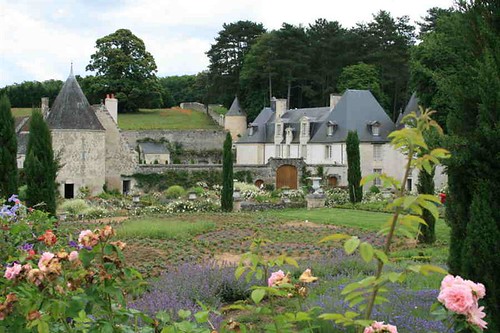
The Garden of Intelligence, seen from the Crescent of Fragrances
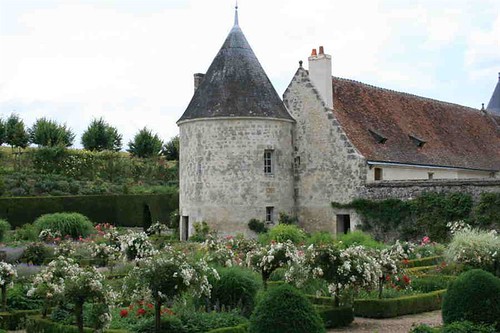
The Garden of the Senses
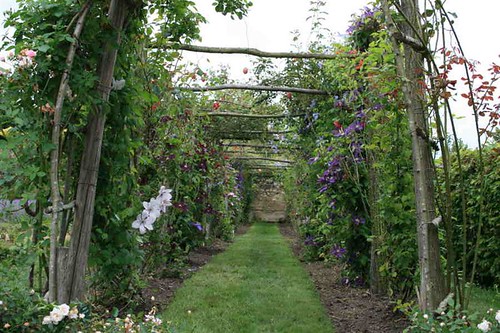
Clematis covered walk

The Garden of Sciences, a chessboard of medicinal herbs
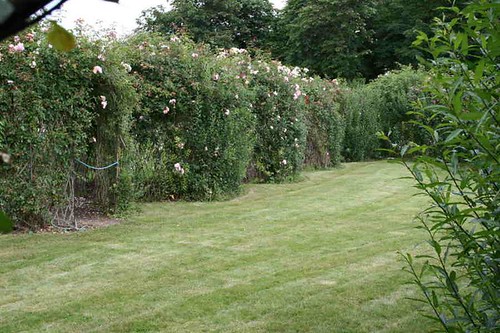
The Garden of Romances, surrounded by a walk of plaited willow and opening out into several "rooms" or bowers of climbing roses

The Garden of Exuberance, a wild-flower meadow.
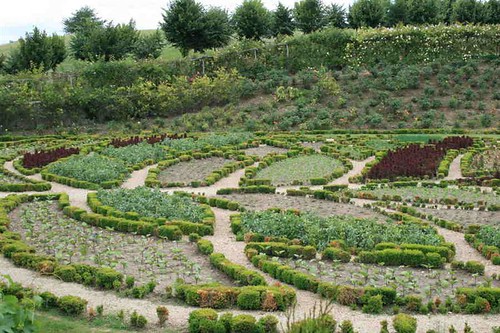
The Garden of Abundance, the vegetable garden, laid out in the shape of a leaf.
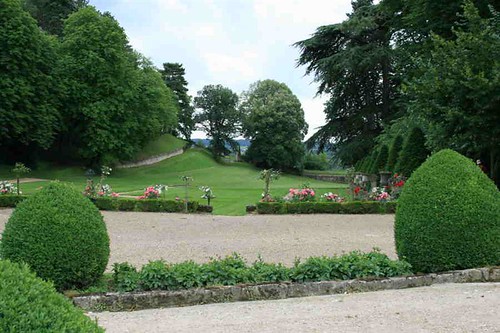
Looking from the chateau towards the Garden of Elegance.
Nothing is more the child of art than a garden. ~ Sir Walter Scott
Laying out grounds may be considered a liberal art, in some sort like poetry and painting.~ William Wordsworth
Women in politics
16.7% of Zimbabwe’s parliamentarians are women although they do hold over 22% of political offices. The population is 52% women.
If you compare these figures with the world statistics, you find that they fit in below the Italy at 17.3% women parliamentarians and fractionally above the USA at 16.3%. The UK House of Commons is 19.7% women. Scandinavian countries dominate the top of the table, but at the top is Rwanda at 48.8%.
In 2003 the US, France and Japan lagged behind 13 sub-Saharan countries . After the recent elections, France has risen from under 13% to 18.4%.
In Zimbabwe, a Fifty-Fifty campaign organised by the Women in Politics Support Unit is calling for greater representation of women. It will be interesting to see if yet another African country can succeed better than much of the developed world.
If you compare these figures with the world statistics, you find that they fit in below the Italy at 17.3% women parliamentarians and fractionally above the USA at 16.3%. The UK House of Commons is 19.7% women. Scandinavian countries dominate the top of the table, but at the top is Rwanda at 48.8%.
In 2003 the US, France and Japan lagged behind 13 sub-Saharan countries . After the recent elections, France has risen from under 13% to 18.4%.
In Zimbabwe, a Fifty-Fifty campaign organised by the Women in Politics Support Unit is calling for greater representation of women. It will be interesting to see if yet another African country can succeed better than much of the developed world.
Wednesday, 25 July 2007
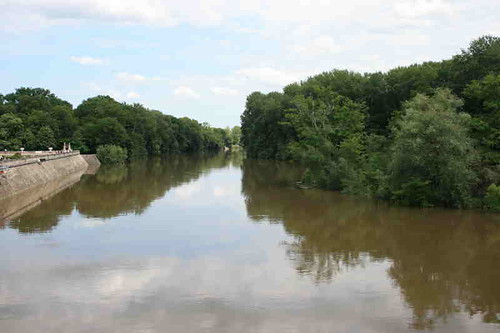
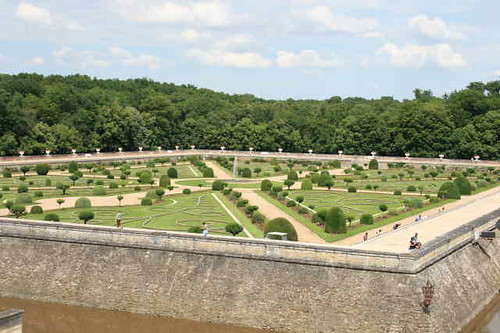
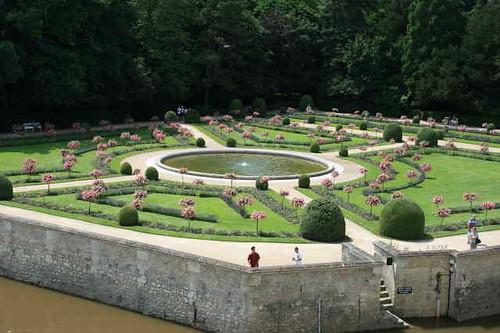
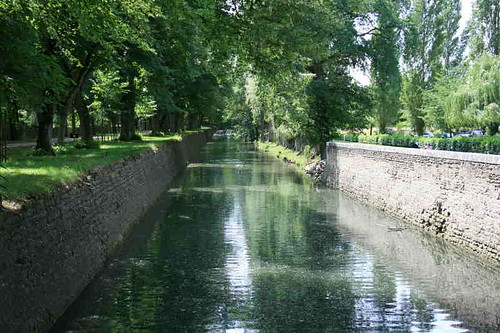
Chenonceau
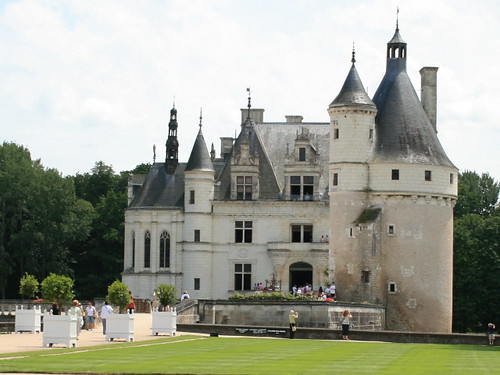
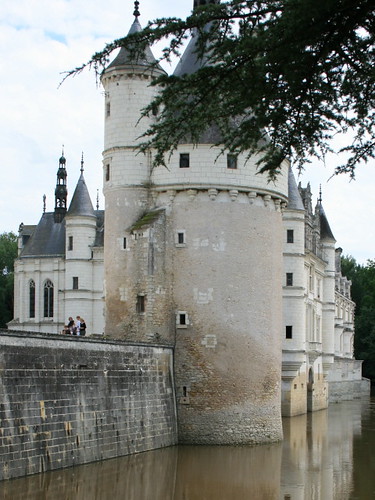
Tired, after a horrible day at work, I'm just going to show some pictures of the chateau at Chenonceau. No guided tour, no tips required!
Tuesday, 24 July 2007
The sinking of the SS Mendi
On the night of 21 February 1917 there was a fog in the English Channel. The SS Mendi had set out from South Africa to take men to the Western Front. It set sail from Plymouth and was making its way to Le Harvre when it was rammed by a mail boat just eleven miles south of the Isle of Wight.
The story goes that the Reverend Isaac Dyoba spoke to the men:
Be quiet and calm, my countrymen, for what is taking place is exactly what we came to do. We are going to die, but that is what we came for..... I, a Xhosa, say you are my brothers. Zulus, Swazis, Pondos, Basothos and all others, let us die like brothers. We are the sons of Africa....
Over 600 men died.
After all this time, some attention is being paid to the tragedy.
- The Commonwealth War Graves Commission in Southampton has updated the Hollybrook Memorial to the men who died with their correct names .
- A CD was produced in October 2006 and distributed to schools to highlight the role of black soldiers in World War I.
- English Heritage has commissioned a study of the Mendi from Wessex Archaeology.
- This weekend, senior South African officials marked the 90th anniversary of the sinking by laying wreaths in the sea on the spot where the ship sank. There is a link to a short video, but I am not confident of it remaining live.
Supporting women - Victoria's Secret, Marks and Spencer
Cotton prices have been declining for years. Over the last 10 years this decline has been the direct result of rich nations protecting their own cotton industries. The value of subsidies granted to US cotton producers is greater than the total national income of Burkina Faso. The farmers in developing countries have no subsidies and cannot produce cotton at a competitive price.
One way to combat this is to produce cotton that has some added value. Helvetas, a Swiss development organisation has one project designed to assist the development of the organic cotton industry in Burkina Faso. Since 2004 they have supported a programme to produce cotton which can both be labelled organic and comply with Fairtrade regulations, so commanding a premium above the usual price.
In this time the number of organic cotton producers has increased from 72 to over 1000, and the proportion of women producers has risen from 21% to 42%
The Rachel Carson Memorial Lecture gives some details of other organic cotton initiatives. And here are some reasons you might want to buy clothes made from organic cotton.
Under a recent agreement , one of the buyers of the organic cotton will be the Sri Lankan company, MAS Holdings who are suppliers to, amongst others, Marks and Spencer and Victoria’s Secret.
In Sri Lanka women make up 85% of the textile workforce, and are often exploited. However, as reported in Compact Quarterly,
So it looks as though, if you buy the right sort of underwear from Marks and Spencer, or Victoria’s Secrets, you could be supporting women in several different ways.
One way to combat this is to produce cotton that has some added value. Helvetas, a Swiss development organisation has one project designed to assist the development of the organic cotton industry in Burkina Faso. Since 2004 they have supported a programme to produce cotton which can both be labelled organic and comply with Fairtrade regulations, so commanding a premium above the usual price.
In this time the number of organic cotton producers has increased from 72 to over 1000, and the proportion of women producers has risen from 21% to 42%
The Rachel Carson Memorial Lecture gives some details of other organic cotton initiatives. And here are some reasons you might want to buy clothes made from organic cotton.
Under a recent agreement , one of the buyers of the organic cotton will be the Sri Lankan company, MAS Holdings who are suppliers to, amongst others, Marks and Spencer and Victoria’s Secret.
In Sri Lanka women make up 85% of the textile workforce, and are often exploited. However, as reported in Compact Quarterly,
In November 2003, a program called “MAS Women Go Beyond” was launched to empower employees and impact communities by championing the cause of women’s empowerment in society. The program also focuses on ensuring employees’ career advancement, strengthening their work-life balance and rewarding excellence.Last year MAS partnered with GAP Inc to launch the GAP Go Beyond program which focuses on providing sustainable development education to students and women in the local community.
So it looks as though, if you buy the right sort of underwear from Marks and Spencer, or Victoria’s Secrets, you could be supporting women in several different ways.
Sunday, 22 July 2007
Recycling newspaper in 1927
When we first explored the attic of our house we found an incredible array of broken furniture, books, wine racks (containing empty bottles), pictures, documents, all sorts of luggage, and stacks upon stacks of newspapers.

In the stacks of newspapers were some supplements from "Veillées de Chaumières", dated between 1923 and 1928. They are mostly handicrafts, recipes, and household tips. In a way it's a shame the whole magazines weren't kept because they make fascinating reading. I managed to spirit these away because my magpie tendencies are rather frowned upon.
I was looking through these yesterday and found that even in 1928, they recycled newspaper: Don't throw out old newspapers, they can be very useful.

I glanced through the list of uses and one caught my eye. To translate the third paragraph:
Old newspapers can equally serve as undergarments; tacked on to fabric, they make a very comfortable lining.
You would never think that these models, on the opposite page, could be wearing newspaper undergarments. Didn't they rustle rather a lot?

So, you see, I've provided you with a recycled way of recycling, and you would never have known if I hadn't retrieved those papers from the recycling bin. My magpie ways are totally vindicated.
The French health service is changing
When we first lived in France, about 15 years ago, I was taken aback by the differences in the health services between France and the UK. I kept having to remind myself that I couldn’t walk off without paying - I’d have to pay before I left the surgery.
GPs were very inclined to prescribe anything you wanted, or could possibly want. When one of my sons had tonsillitis I can remember coming away from the pharmacy with 440 FF (66 euros) worth of pills and potions. One of them turned out to be some sort of salt water gargle! Yes, the money was reimbursed (though not fully) but you had to collect the little stickers from the packets and send them off.
What is more, if you were so inclined, you could go to each and every doctor in the vicinity, presumably collecting prescriptions as you went along. You could also go to any specialist you wanted to without being referred by a GP. Seventy percent of costs were covered by the state and the remaining amount by top-up insurance.
I know things have changed. There are posters up in pharmacies assuring people that generic medicines are perfectly OK. You have to register with one GP, your medecin traitant. You have a carte vitale and are computerised. You can no longer take yourself off to a specialist without a referral, apart from gynaecologists, ophthalmologists, and dentists, without incurring a financial penalty. ( I’m intrigued to know why gynaecologists should be exempt.) The state no longer covers the full costs: there is a non-refundable charge of 1 (one) euro and any treatment costing over 91 euros has a charge of 18 euros. There is supposed to be a safety net for the most vulnerable.
All those years ago a friend’s husband fell from a ladder and damaged his back. He was hospitalised and received excellent treatment, but he was self-employed and they struggled with the loss of income and paying hospital bills. It took ages for the state and insurance payments to arrive. As my friend said, the authorities are very quick to take your money but very slow in giving any back. I don’t know whether this has improved or not - it would need to.
I gather from The Lancet the health service is still in considerable debt so Sarkozy is planning to introduce yet more measures: to increase the non-refundable charge from 1 euro to 10 euros; to control drug prescriptions further; to tighten up on excessive sick-leave; and to reduce the levels of state reimbursement when people self-refer to specialists.
It seems that medical staff are not happy.
GPs were very inclined to prescribe anything you wanted, or could possibly want. When one of my sons had tonsillitis I can remember coming away from the pharmacy with 440 FF (66 euros) worth of pills and potions. One of them turned out to be some sort of salt water gargle! Yes, the money was reimbursed (though not fully) but you had to collect the little stickers from the packets and send them off.
What is more, if you were so inclined, you could go to each and every doctor in the vicinity, presumably collecting prescriptions as you went along. You could also go to any specialist you wanted to without being referred by a GP. Seventy percent of costs were covered by the state and the remaining amount by top-up insurance.
I know things have changed. There are posters up in pharmacies assuring people that generic medicines are perfectly OK. You have to register with one GP, your medecin traitant. You have a carte vitale and are computerised. You can no longer take yourself off to a specialist without a referral, apart from gynaecologists, ophthalmologists, and dentists, without incurring a financial penalty. ( I’m intrigued to know why gynaecologists should be exempt.) The state no longer covers the full costs: there is a non-refundable charge of 1 (one) euro and any treatment costing over 91 euros has a charge of 18 euros. There is supposed to be a safety net for the most vulnerable.
All those years ago a friend’s husband fell from a ladder and damaged his back. He was hospitalised and received excellent treatment, but he was self-employed and they struggled with the loss of income and paying hospital bills. It took ages for the state and insurance payments to arrive. As my friend said, the authorities are very quick to take your money but very slow in giving any back. I don’t know whether this has improved or not - it would need to.
I gather from The Lancet the health service is still in considerable debt so Sarkozy is planning to introduce yet more measures: to increase the non-refundable charge from 1 euro to 10 euros; to control drug prescriptions further; to tighten up on excessive sick-leave; and to reduce the levels of state reimbursement when people self-refer to specialists.
It seems that medical staff are not happy.
Saturday, 21 July 2007
PhotoHunter: tiny
I had difficulty thinking of anything at all but here are my offerings.
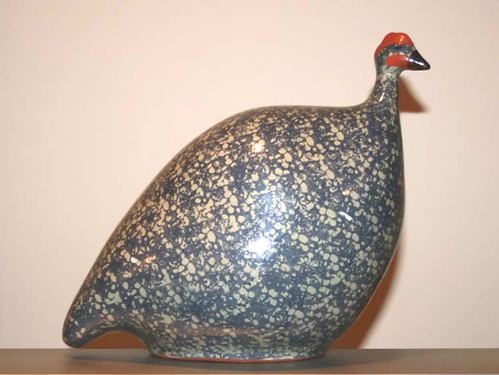
A ceramic guinea fowl (pintade in French) with a tiny head. We bought it about 10 years ago, at Les Céramiques de Lussan who appear to be making them still. We have ours looking out of the window normally, very similar to their illustration, but the reflection on the glass was too much, so I moved it to take the picture.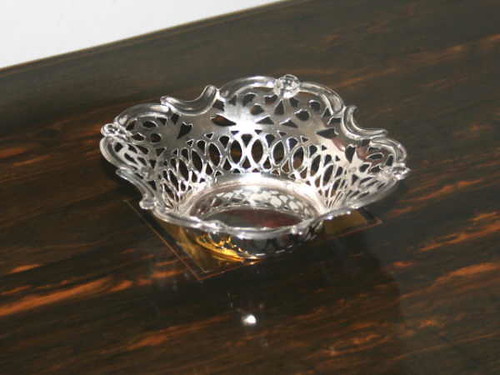
A tiny dish.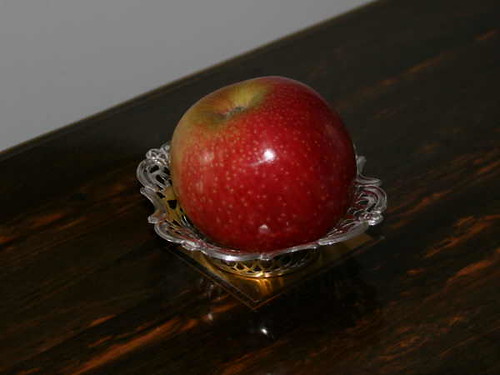
It isn't until you put something in it that you realise just how tiny. It may not be terribly useful but it's pretty.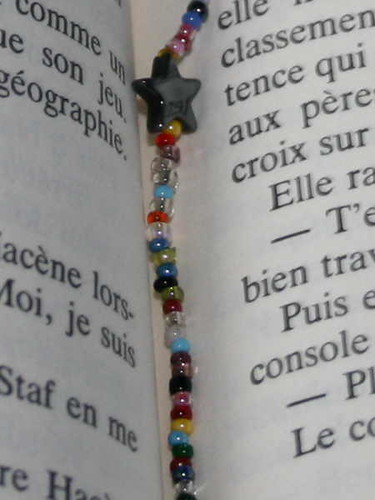
And last, but not least, my favourite bookmark made with tiny beads.
I sometimes think I could write a thesis on bookmarks. I've used everything from old, torn tickets to silver ones which you clip on to the pages. This was given as a present several years ago, and it's perfect. It's fine enough that the pages of the book can lie relatively flat, but it isn't too flimsy. The beads, although individually tiny, together have enough weight to stay in place well.
Friday, 20 July 2007
Energy for Life - empowering women in Rwanda

Do you remember the wind-up radio? The one that didn't need a battery or other electricity supply because you could wind it up to recharge it? It had a lot of publicity some years ago.
Now, amongst other things, the Freeplay Foundation produces a portable energy source, the Freecharge Weza. It generates energy by step action, though it can also be recharged from a wind turbine or solar panel.
As reported in the Freeplay newsletter, Wezas have provided a means for Rwandan women to lift themselves out of poverty. They live in areas where there is no electricity so people will pay to have their mobile phones recharged, and this allows the women to buy basic goods they could never afford previously, such as soap and clothes. There are various lighting systems, lanterns and flashlights available too, and can be rented out to generate further income. They all use wind-up energy.
The loan taken out for starting up is repaid out of earnings, and the money can then be used to help other enterprises in the area.
Reconstructive surgery after FGM - counterproductive?
There is a report in the Voice of America, telling the story of a woman, Abi Sanon, who has had reconstructive surgery after having been circumcised as a one week old baby. The surgeon who performed the reconstruction was Michel Akotionga, one of the doctors trained by Dr Foldès.
Apart from Abi Sanon's own story, there is a quote from Benjamine Doamba. She was circumcised herself and campaigns against FGM. She says she feels no less a woman for having had it done and has no need to have reconstructive surgery, but fully supports anyone who does.
She raises an interesting point by saying that she worries that the publicity surrounding reconstructive surgery deflects attention from the more important campaign to eradicate the practice. Additionally, she is afraid that if parents are in two minds about whether to have the procedure done on their daughters, they may have it done anyway, because it's reversible later on anyway.
I can understand how that thought could come about, but if the education which must be part of the campaign against FGM is done well, parents will realise that they could be inflicting years of physical and mental pain in the meantime. Reconstructive surgery can only do so much.
Read Papillon's story.
Apart from Abi Sanon's own story, there is a quote from Benjamine Doamba. She was circumcised herself and campaigns against FGM. She says she feels no less a woman for having had it done and has no need to have reconstructive surgery, but fully supports anyone who does.
She raises an interesting point by saying that she worries that the publicity surrounding reconstructive surgery deflects attention from the more important campaign to eradicate the practice. Additionally, she is afraid that if parents are in two minds about whether to have the procedure done on their daughters, they may have it done anyway, because it's reversible later on anyway.
I can understand how that thought could come about, but if the education which must be part of the campaign against FGM is done well, parents will realise that they could be inflicting years of physical and mental pain in the meantime. Reconstructive surgery can only do so much.
Read Papillon's story.
Communication, or lack of it
To illustrate a point, I am reproducing part of one of Papillon's earlier posts (the one where she meets Dr Icecube), with a comment from a later post, taking her to task for something she didn't say, and her reply, which does miss a point made by Guardian Angel.
This was commented on weeks later by a nurse who, I have a strong suspicion, knows the character involved.
And Papillon's reply:
The nurse appears to miss the point that Papillon was trying to make totally and then introduces all sorts of other questions, but Papillon also overlooks the fact that the anaesthetist may have had some personal issues which turned it into a bad day. Not that he appeared to be any warmer on the day of the operation.
There are other parts I thought interesting. France is often held up to be a great example of how a health service should be, but how many British people would like to be paying for each consultation as it comes? Yes you can claim the money back, but not always all of it unless you have extra insurance, and it often takes quite a while to turn up. And they appear to have staff shortages too.
I spent exactly 7 minutes with Dr Ice-cube. 7 minutes opposite an iceberg who started by taking my blood pressure in a heavy silence. Then he asked me some questions with an uncommunicative face (what medicines do I take? Do I have any allergies? Have I had previous operations?) He then examined the results of my blood tests, and told me everything was all right. Then he delivered a rambling speech in a rapid voice, explaining to me that I wouldn’t be intubated, but I would have oxygen from a mask, that I would be asleep for approximately an hour and a half.
Completely without a glimmer of sympathy, Dr Cold told me I would have to be fasting from midnight from the evening before the operation. He didn’t tell me but I read in the information leaflet that fasting eliminates the risk of suffocating from untimely vomiting. He also said not to take any aspirin.
He got his breath back and asked me, while filling in the patient consent form for the anaesthetic, if I had any questions.
I asked him what the sedative was for which is given before the anaesthetics. He explained that the sedative helped reduce my nervousness, natural when faced with surgery, and so to help the anaesthesia. I also asked about waking up, I wanted to know if I would feel dopey. He answered no, that I would wake up as if after a night’s sleep. If I take the prescribed medicines, he told me, I will feel no pain. I spoke to him about my patch and he assured me I could keep it when I enter the clinic.
7 minutes went by this way and he took me back to the secretary. I paid 28 euros, 4 euros per minute, for this rather frosty anaesthesia consultation. I was a little irritated. Not because of the price, no, because of Dr Snow’s temperature.
So, all right, kindness, human warmth and sympathy aren’t rights, nobody is obliged to be warm and kind (although for the medical professions that's debatable) but all the same, the coldness of the anaesthetist troubled me, if not annoyed me. And then to have been dispatched in seven minutes, that downright worried me. I reassured myself as well as I could by telling myself that I must be a commonplace and trivial case, but above all the fact that I know Dr Foldès will be there and that I am his patient and not Dr Iceberg's calms my distress.
This was commented on weeks later by a nurse who, I have a strong suspicion, knows the character involved.
Mr FOLDES is a pioneer in your reconstruction and those of all the other victims. Thanks to him and to the anaesthetist.
I am an anaesthetic nurse and so an assistant to Drs Snow, Icecube, DontGiveaDamn…
Without them, the operation would have traumatised you a second time. Happily, anaesthesia exists. Those who practice it are on the road to extinction. This speciality doesn’t appeal to young medical students. It’s not a game of poker where you have to pretend with a mischievous expression, or a half smile. It’s a matter of putting you asleep and waking you. It seems so simple.
Alas it’s far from that.
It's very challenging practicing this profession, very stressful, very demanding. Like the surgeon when he repairs you with his hands. The anaesthetist has a consultation with you for two minutes to see you. That's true. Your face, your neck, your general silhouette, your veins,... are warning indicators or signs for the progress of the anaesthetic. He can't tell you compassionately that everything will go well, knowing that zero risk of accident doesn't exist. Lowered eyes, writing, aren't signs of indifference but of concentration.
An anaesthetist who has just lost his mother after a long illness, or his son after a motorcycle accident, will be on duty for a consultation, for an expert look, or to watch for a problem for an emergency cesarean, to resuscitate the mother or the baby. This anaesthetist is a human being who has weaknesses, pain, tiredness... he won't tell you, he takes it upon himself and looks after you.
The consultation lasted two minutes for you, ten minutes for another patient. He has seen ten patients while one other consultant will have seen only five patients. It is public service which is larger and larger, and less and less recognised.
Waking up is a matter of a miracle in the face of the shortage of nursing staff.
I am subject to confidentiality but freely attacking anaesthetists makes me fly off the handle.
I hope you continue well.
Signed: A guardian angel who is at your disposal.
And Papillon's reply:
Dear guardian angel, far from challenging anaesthesia,I asked myself about the question (I was regretting not "being there" during my operation) and from my thoughts it emerged that it was without doubt good for me to have a general anaesthetic.
A large part of the psychological trauma from circumcision comes from the fact that it's done while conscious. So you can well imagine that I am not going to militate against anaesthesia. On the contrary, in view of my feeble resistance to pain, I am very happy that it exists and that there are (still) specialists who practice this discipline.
It wasn't the profession I was criticising here, but a man. Who happened to be an anaesthetist but could have been the surgeon or the nurse who met me on my arrival at the clinic. I found this man cold and distant. And that annoyed me.
There are surely warm-hearted anaesthetists, as there are no doubt surgeons and gynaecologists who are cold as ice. Equally, there are no doubt patients who are relieved that the consultation lasts only two minutes, as there are no doubt others who aren't reassured after a quarter of an hour.
I am not generalising, dear guardian angel, and I am not attacking all anaesthetists gratuitously. I'm talking about what I felt when I met that man, that day, and at that time.
The nurse appears to miss the point that Papillon was trying to make totally and then introduces all sorts of other questions, but Papillon also overlooks the fact that the anaesthetist may have had some personal issues which turned it into a bad day. Not that he appeared to be any warmer on the day of the operation.
There are other parts I thought interesting. France is often held up to be a great example of how a health service should be, but how many British people would like to be paying for each consultation as it comes? Yes you can claim the money back, but not always all of it unless you have extra insurance, and it often takes quite a while to turn up. And they appear to have staff shortages too.
Thursday, 19 July 2007
Missing the point
One comment on Papillon’s blog recently** was from a nurse, taking Papillon to task over calling her anaesthetist by various names, such as Dr Iceberg, Snow, Frost, Ice-cube. You get the idea - I don’t think he had taken the course in communication skills.
During my time working in the school of medicine the students did have to study communication skills, but they weren’t keen. I believe many of them felt it took up valuable time and wasn’t really relevant. Any of them who did sound enthusiastic were the ones who were already good communicators. Sometimes it seems as though the very people who need it most are the ones who don’t see the point.
It often happens that I have to send out a "blanket" request for people to do something like making sure their mailboxes aren’t too full. I can guarantee that the worst offenders won’t think it applies to them. But perhaps it's my communication that is at fault: I'm not sufficiently blunt.
These days any students I come into contact with are more general STEM (science, technology, engineering, maths) students. Their blind spots are that they want hands on work experience and don’t seem to have any real view of what their working lives will be like. So they turn their noses up at anything that might involve sitting at a desk, learning any sort of business or management skills, and (I really can’t comprehend this one) they don’t want any computer work. This is no lie, I met a prospective computer science graduate who left a work experience placement because he had to sit in front of a computer all day. What on earth was he expecting?
** you won’t find that comment yet. Last night I realised I had put all the most recent comments on the wrong post and had to remove them all. I decided I was clearly too tired to think straight and went to bed!
During my time working in the school of medicine the students did have to study communication skills, but they weren’t keen. I believe many of them felt it took up valuable time and wasn’t really relevant. Any of them who did sound enthusiastic were the ones who were already good communicators. Sometimes it seems as though the very people who need it most are the ones who don’t see the point.
It often happens that I have to send out a "blanket" request for people to do something like making sure their mailboxes aren’t too full. I can guarantee that the worst offenders won’t think it applies to them. But perhaps it's my communication that is at fault: I'm not sufficiently blunt.
These days any students I come into contact with are more general STEM (science, technology, engineering, maths) students. Their blind spots are that they want hands on work experience and don’t seem to have any real view of what their working lives will be like. So they turn their noses up at anything that might involve sitting at a desk, learning any sort of business or management skills, and (I really can’t comprehend this one) they don’t want any computer work. This is no lie, I met a prospective computer science graduate who left a work experience placement because he had to sit in front of a computer all day. What on earth was he expecting?
** you won’t find that comment yet. Last night I realised I had put all the most recent comments on the wrong post and had to remove them all. I decided I was clearly too tired to think straight and went to bed!
Wednesday, 18 July 2007
Girl-friendly toilet facilities in Ghana
Absenteeism from schools has been particularly high amongst adolescent girls because of issues surrounding menstruation, and this often leads to dropping out from school altogether.
After consultation with girls, special toilet facilities have been designed and put into place in ten locations. They had to have good washing facilities, privacy, and be safe and secure. They have been put in place by Plan International, a child-centred development organisation with no religious, political or governmental affiliations, at a cost of $3,500 per block.
Coupled with education and information, these facilities have been successful in improving school attendance, so now the government wants to extend the programme throughout the country.
After consultation with girls, special toilet facilities have been designed and put into place in ten locations. They had to have good washing facilities, privacy, and be safe and secure. They have been put in place by Plan International, a child-centred development organisation with no religious, political or governmental affiliations, at a cost of $3,500 per block.
Coupled with education and information, these facilities have been successful in improving school attendance, so now the government wants to extend the programme throughout the country.
Tuesday, 17 July 2007
Boys and their toys
I was reading recently that Ipanema’s son was given a teddy bear by his girlfriend. One of the people commenting said that she found that a strange present for a girl to give a boy.
Once upon a time I would have thought the same but I became used to it as my two sons made a huge collection of girlfriend-given cuddly toys, all of them tossed carelessly into a cupboard in the spare bedroom.. They never did like cuddly toys, even when quite small, (and I did try, really I did) so there were quite a few to hand on to worthy causes.
My elder son’s passion was for cars rather than teddy bears, and from a very early age. I distinctly remember having dinky toys driven over my very pregnant belly. He somehow developed this fascination for four wheels all on his own. Neither my husband nor I are in the least bit interested, and I can hardly tell one make of car from another. In the end I was so fed up being asked things like “how does a turbo work?” that I bought him a book on motor vehicle technology and let him get on with it.
The second was more interested in crafts, so although I am not at all a crafty person (positively clumsy), I could at least join in this time. The unfortunate thing was that he felt these were too “girly” to continue.
If they had followed our examples, at the very least they would both have been avid readers. All this makes me wonder just how much influence we do have over the interests of our children, whether genetic or anything else.
Once upon a time I would have thought the same but I became used to it as my two sons made a huge collection of girlfriend-given cuddly toys, all of them tossed carelessly into a cupboard in the spare bedroom.. They never did like cuddly toys, even when quite small, (and I did try, really I did) so there were quite a few to hand on to worthy causes.
My elder son’s passion was for cars rather than teddy bears, and from a very early age. I distinctly remember having dinky toys driven over my very pregnant belly. He somehow developed this fascination for four wheels all on his own. Neither my husband nor I are in the least bit interested, and I can hardly tell one make of car from another. In the end I was so fed up being asked things like “how does a turbo work?” that I bought him a book on motor vehicle technology and let him get on with it.
The second was more interested in crafts, so although I am not at all a crafty person (positively clumsy), I could at least join in this time. The unfortunate thing was that he felt these were too “girly” to continue.
If they had followed our examples, at the very least they would both have been avid readers. All this makes me wonder just how much influence we do have over the interests of our children, whether genetic or anything else.
Sunday, 15 July 2007
Malawi's maize
I mentioned a while ago that the maize harvest in Malawi was going to be a record this year, on top of a record last year.
While this was good news, I did read elsewhere the question being asked of why they were still receiving aid from the US. It might seem that it’s a good idea – the money could be given to people living in such poverty they cannot afford to buy maize, even at the presumably low prices a record harvest would produce.
Regrettably, according to an article in The Observer, the aid money has to be spent buying American grain which is to be shipped to Malawi. So Malawi farmers cannot sell their produce and the price has dropped drastically, and no doubt the shipping of the grain from the States is adding to global warming. The farmers in the meantime have been struggling themselves and have been put off buying seed from the following year, and they don’t have the money for it anyway.
Then the ban on selling grain outside Malawi was lifted so that farmers could sell the excess to Zimbabwe. Again, a good idea that would support the price of maize and help Zimbabwe’s urgent need. According to The Daily Times in Malawi though, there has been little policing of the amount of maize exported which is necessary to ensure sufficient stocks are left in Malawi for the country’s own needs.
What is required, according to Mary Khozombah who works for Oxfam in Malawi, is empowerment of local farmers.
While this was good news, I did read elsewhere the question being asked of why they were still receiving aid from the US. It might seem that it’s a good idea – the money could be given to people living in such poverty they cannot afford to buy maize, even at the presumably low prices a record harvest would produce.
Regrettably, according to an article in The Observer, the aid money has to be spent buying American grain which is to be shipped to Malawi. So Malawi farmers cannot sell their produce and the price has dropped drastically, and no doubt the shipping of the grain from the States is adding to global warming. The farmers in the meantime have been struggling themselves and have been put off buying seed from the following year, and they don’t have the money for it anyway.
Then the ban on selling grain outside Malawi was lifted so that farmers could sell the excess to Zimbabwe. Again, a good idea that would support the price of maize and help Zimbabwe’s urgent need. According to The Daily Times in Malawi though, there has been little policing of the amount of maize exported which is necessary to ensure sufficient stocks are left in Malawi for the country’s own needs.
What is required, according to Mary Khozombah who works for Oxfam in Malawi, is empowerment of local farmers.
People who want to help Malawi need to support agriculture by educating farmers, improving irrigation, helping people find other forms of income. We need empowerment so our farmers can export. Ask us! We might come up with good ideas.
Food aid should be the last resort, in an emergency - and even then it should be bought locally if possible.
FGM contacts in the UK
Hospitals and Clinics in the UK offering Specialist FGM (Female Genital Mutilation) Services
Taken from Forward
African Well Women's Clinic
Guy's & St Thomas's Hospital
McNair Centre
London SE1 9RT
Tel: 020 7188 6872
Contact: Ms. Comfort Momoh
Mobile: 07956 542576 / 07956407063
Pager: 0870055500 (Ask for 881018)
Open: Mon-Fri 9.30am - 4.30pm
Email: comfort.momoh@gstt.sthames.nhs.uk
African Well Women's Clinic
Antenatal Clinic
Central Middlesex Hospital
Acton Lane, Park Royal
London NW10 7NS
Tel: 020 8965 5733
Open: Thursday 9am - 12pm
Contact: Mr Harry Gordon
African Well Women's Clinic
Antenatal Clinic
Northwick Park & St Mark's Hospitals
Watford Road
Harrow
Middlesex HA1 3UJ
Tel: 020 8869 2870
Open: Friday 9am -2.30/3pm
Contact: Jeanette Carlsson
African Women's Health Clinic
Whittington Hospital
Level 5, Highgate Hill
London N19 5NF
Tel: 020 7288 3482
Open: Last Wednesday of each month (all day)
Home visits or you can attend the hospital
Contacts: Joy Clarke or Shamse Ahmed
Women's and Young People's Service
Sylvia Parkhurst Health Centre
Mile End Hospital
Bancroft Road
London E1 4DG
Contact: Dr. Geetha Subramanian
Tel: 020 7377 7898
Open: Mon-Fri 9am-5pm
Email: geetha.subramanian@thpct.nhs.uk
African Women's Clinic
The Elizabeth Garret Anderson and Obstetric Hospital
Huntley Street,
London, WC1E 6DH
Tel 020 7387 9300 ext. 2531
Contact: Maligaye Bikoo
Email: egappts@uclh.nhs.uk
Email: maligaye.bikoo@uclh.nhs.uk
Multi-Cultural Antenatal Clinic
Liverpool Women's Hospital
Crown Street
Liverpool L8 7SS
Tel: 0151 702 4175
Open: Wed: 5.30pm-7pm and Fri: 9.30am- 11am
Contact: Dorcas Akeju
Chelsea and Westminster
Gynaecology & Midwifery Departments
369 Fulham Road
London SW10 9NH
Tel: 020 8846 7926
Contact: Gubby Ayida
Email: gubby.ayida@chelwest.nhs.uk
Community Health Project
Kirkdale House
7 Kirkdale Road
London E11 1HP
Tel: 020 8928 2243 / 020 8928 2244
Contact - Jennifer Bourne, Specialist Nurse or Dr Faduma Hussein
St Mary's Hospital
Gynaecology & Midwifery Departments
Praed Street
London W2
Contacts: Lynne Pacanowski/ Judith Robbins
Tel: Lynne: 020 7886 6691/ Judith: 020 7886 1443
Birmingham Heartlands Hospital
Princess of Wales Women's Unit
Labour Ward,
Bordesley Green East
Birmingham
Tel: 0121 424 3514
Contact - Alison Hughes or Teresa Ball
Email: alison-aggathea@yahoo.com
African Women's Clinic
Women and Health
4 Carol Street (Camden)
London NW1 OHU
Tel: 020 7482 2786
Women can self refer for services
Contact: Maligaye Bikoo (CNS)
Acton African Well Woman Centre
Mill Hill Surgery
111 Avenue Road
Acton W3 8QH
Tel: 0208 383 8761
Open: Tues: 2.00 pm-5.00pm
Contact: Sucaad O'Nielsen
Email: sucaad.o.nielsen@ealingpct.nhs.uk
No appointment necessary and women can self refer
Taken from Forward
African Well Women's Clinic
Guy's & St Thomas's Hospital
McNair Centre
London SE1 9RT
Tel: 020 7188 6872
Contact: Ms. Comfort Momoh
Mobile: 07956 542576 / 07956407063
Pager: 0870055500 (Ask for 881018)
Open: Mon-Fri 9.30am - 4.30pm
Email: comfort.momoh@gstt.sthames.nhs.uk
African Well Women's Clinic
Antenatal Clinic
Central Middlesex Hospital
Acton Lane, Park Royal
London NW10 7NS
Tel: 020 8965 5733
Open: Thursday 9am - 12pm
Contact: Mr Harry Gordon
African Well Women's Clinic
Antenatal Clinic
Northwick Park & St Mark's Hospitals
Watford Road
Harrow
Middlesex HA1 3UJ
Tel: 020 8869 2870
Open: Friday 9am -2.30/3pm
Contact: Jeanette Carlsson
African Women's Health Clinic
Whittington Hospital
Level 5, Highgate Hill
London N19 5NF
Tel: 020 7288 3482
Open: Last Wednesday of each month (all day)
Home visits or you can attend the hospital
Contacts: Joy Clarke or Shamse Ahmed
Women's and Young People's Service
Sylvia Parkhurst Health Centre
Mile End Hospital
Bancroft Road
London E1 4DG
Contact: Dr. Geetha Subramanian
Tel: 020 7377 7898
Open: Mon-Fri 9am-5pm
Email: geetha.subramanian@thpct.nhs.uk
African Women's Clinic
The Elizabeth Garret Anderson and Obstetric Hospital
Huntley Street,
London, WC1E 6DH
Tel 020 7387 9300 ext. 2531
Contact: Maligaye Bikoo
Email: egappts@uclh.nhs.uk
Email: maligaye.bikoo@uclh.nhs.uk
Multi-Cultural Antenatal Clinic
Liverpool Women's Hospital
Crown Street
Liverpool L8 7SS
Tel: 0151 702 4175
Open: Wed: 5.30pm-7pm and Fri: 9.30am- 11am
Contact: Dorcas Akeju
Chelsea and Westminster
Gynaecology & Midwifery Departments
369 Fulham Road
London SW10 9NH
Tel: 020 8846 7926
Contact: Gubby Ayida
Email: gubby.ayida@chelwest.nhs.uk
Community Health Project
Kirkdale House
7 Kirkdale Road
London E11 1HP
Tel: 020 8928 2243 / 020 8928 2244
Contact - Jennifer Bourne, Specialist Nurse or Dr Faduma Hussein
St Mary's Hospital
Gynaecology & Midwifery Departments
Praed Street
London W2
Contacts: Lynne Pacanowski/ Judith Robbins
Tel: Lynne: 020 7886 6691/ Judith: 020 7886 1443
Birmingham Heartlands Hospital
Princess of Wales Women's Unit
Labour Ward,
Bordesley Green East
Birmingham
Tel: 0121 424 3514
Contact - Alison Hughes or Teresa Ball
Email: alison-aggathea@yahoo.com
African Women's Clinic
Women and Health
4 Carol Street (Camden)
London NW1 OHU
Tel: 020 7482 2786
Women can self refer for services
Contact: Maligaye Bikoo (CNS)
Acton African Well Woman Centre
Mill Hill Surgery
111 Avenue Road
Acton W3 8QH
Tel: 0208 383 8761
Open: Tues: 2.00 pm-5.00pm
Contact: Sucaad O'Nielsen
Email: sucaad.o.nielsen@ealingpct.nhs.uk
No appointment necessary and women can self refer
Salimata Badji-Knight
Salimata Badji-Knight and three of her sisters work together against the practice of female circumcision, otherwise known as female genital mutilation (FGM).
She was born in Senegal where she was circumcised at the age of five. One of the worst things about the circumcision she says, apart from the pain and the crying, was that the girls were tricked into thinking they were being taken on a picnic.
She moved to Paris at the age of nine where she was amazed to find that not every girl was circumcised, and even more horrified when girls were taken back to Africa for a "holiday" only to be circumcised when they were there. Since then most of her adult life has been spent campaigning against FGM. She now lives in Dorset in the south of England, and works for FORWARD, the Foundation for Women's Health Research and Development.
You can read her story at The Forgiveness Project.
She was born in Senegal where she was circumcised at the age of five. One of the worst things about the circumcision she says, apart from the pain and the crying, was that the girls were tricked into thinking they were being taken on a picnic.
She moved to Paris at the age of nine where she was amazed to find that not every girl was circumcised, and even more horrified when girls were taken back to Africa for a "holiday" only to be circumcised when they were there. Since then most of her adult life has been spent campaigning against FGM. She now lives in Dorset in the south of England, and works for FORWARD, the Foundation for Women's Health Research and Development.
You can read her story at The Forgiveness Project.
Saturday, 14 July 2007
PhotoHunter: shadows
We're travelling all day on Saturday, and just at this minute I should be preparing!! This will have to go up early, and I won't be able to do the rounds for commenting until Sunday I'm afraid.
One set of shadows from indoors, and one from outdoors.
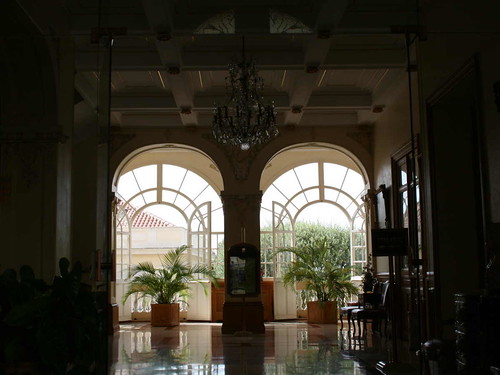
The cool and welcoming hall at the Mairie, Monte Carlo
Mislike me not for my complexion,
The shadowed livery of the burnished sun,
To whom I am a neighbour and near bred.
~ Shakespeare: The Merchant of Venice

The river bank near our home.
What is your substance, whereof are you made,
That millions of strange shadows on you tend?
~ Shakespeare: Sonnet 53


Friday, 13 July 2007
Breakdown
Our dishwasher is en panne.
On Wednesday I went into the kitchen from the office to make myself a cup of tea, and found a puddle on the floor, and a code on the front of the dishwasher to tell me it was leaking. Good, I would never have guessed.
I opened the dishwasher to see if it was just the seal and the electricity went off. We reset the trip switch. We tried turning off the electricity and then opening the dishwasher door - same result. We tried to isolate it. After I had re-started the computer four times (I was attempting to be at work during all this) we left it in the state it was happiest, making rumbling noises, and rang the service people.
It was one of these "Press 1 for..." systems, but, surprise, Press 2 for anglais! Unfortunately it was also a surprise for the young lady at the other end. She assured us that someone would ring us back in 48 hours. After being told that we were leaving on Saturday which is Bastille Day, she said she would mark it as urgent.
That was 52 hours ago.
So we have something to look forward to on our return in September.
On Wednesday I went into the kitchen from the office to make myself a cup of tea, and found a puddle on the floor, and a code on the front of the dishwasher to tell me it was leaking. Good, I would never have guessed.
I opened the dishwasher to see if it was just the seal and the electricity went off. We reset the trip switch. We tried turning off the electricity and then opening the dishwasher door - same result. We tried to isolate it. After I had re-started the computer four times (I was attempting to be at work during all this) we left it in the state it was happiest, making rumbling noises, and rang the service people.
It was one of these "Press 1 for..." systems, but, surprise, Press 2 for anglais! Unfortunately it was also a surprise for the young lady at the other end. She assured us that someone would ring us back in 48 hours. After being told that we were leaving on Saturday which is Bastille Day, she said she would mark it as urgent.
That was 52 hours ago.
So we have something to look forward to on our return in September.
Thursday, 12 July 2007
The price of a child
About £7.50 or $15 if you live in Ghana and your mother sells you along with your three younger siblings.
Imagine the poverty you must be experiencing to feel you have to sell your children. At the time Abena Nyenyanu sold her four she was selling porridge to support them. She was reunited with them after five years under a scheme in Ghana to bring families back together.
A half-way house has been set up in Accra to help children who have been trafficked in this way. They are given medical treatment, schooling, counselling and life skills training before being brought back to their parents after several months. The parents are given income generating skills in case poverty will tempt them to do the same thing again.
Two years ago a law was passed in Ghana to allow prosecution of parents who sell their children to traffickers. The government wants to start enforcing the law, now that awareness of it is widespread. "The grace period is over".
From IRIN reports
Imagine the poverty you must be experiencing to feel you have to sell your children. At the time Abena Nyenyanu sold her four she was selling porridge to support them. She was reunited with them after five years under a scheme in Ghana to bring families back together.
A half-way house has been set up in Accra to help children who have been trafficked in this way. They are given medical treatment, schooling, counselling and life skills training before being brought back to their parents after several months. The parents are given income generating skills in case poverty will tempt them to do the same thing again.
Two years ago a law was passed in Ghana to allow prosecution of parents who sell their children to traffickers. The government wants to start enforcing the law, now that awareness of it is widespread. "The grace period is over".
From IRIN reports
Wednesday, 11 July 2007
Combating FGM - UK and Norway
There have been a number of recent news reports about Female Genital Mutilation in Europe.
It started off in Norway with a flurry of newspaper articles.
First there was uproar in Norway over a television broadcast highlighting the fact that Norwegian born girls are taken back to Africa to be circumcised: "an alarming number of young girls born or living in Norway have been taken back to Somalia during school holiday periods and subjected to circumcision." There has been a law against FGM in Norway for 11 years.
Next there was a report to say that over 250 girls and women have asked for help over the last three years at Oslo's largest hospital after problems resulting from FGM. How many more are suffering in silence?
Thirdly, a piece saying that politicians want to put emergency measures in place. One of these proposals was to be mandatory genital screenings for girls at risk, but that must be approved by Parliament, which is currently on summer recess.
Then today two fairly similar news reports from the BBC.
The first is about Somali born Waris Dirie, now a top model, giving her account of being circumcised at the age of five, and, not unlike Papillon, her all-consuming anger:
Next an item about the police putting up a £20,000 reward for information leading to the arrest of anyone involved in FGM. They have timed this to coincide with the start of the school holidays, when they consider girls to be most at risk of being returned, mainly to Africa, for the ritual. The law in the UK to prevent girls being taken elsewhere for the purpose was passed in 2003 but so far no-one has been prosecuted.
The police are hoping they will get co-operation in this from the public because they don't want a situation to arise whereby girls returning from Africa are routinely screened.
That last is good news to me. Much as I am fiercely against FGM, the thought of young girls being screened as they return to the UK or Norway or anywhere else, worries me. I can't help but think it would be equally appalling for a girl who has been subjected to FGM as for one who has not, to be examined in that way.
It started off in Norway with a flurry of newspaper articles.
First there was uproar in Norway over a television broadcast highlighting the fact that Norwegian born girls are taken back to Africa to be circumcised: "an alarming number of young girls born or living in Norway have been taken back to Somalia during school holiday periods and subjected to circumcision." There has been a law against FGM in Norway for 11 years.
Next there was a report to say that over 250 girls and women have asked for help over the last three years at Oslo's largest hospital after problems resulting from FGM. How many more are suffering in silence?
Thirdly, a piece saying that politicians want to put emergency measures in place. One of these proposals was to be mandatory genital screenings for girls at risk, but that must be approved by Parliament, which is currently on summer recess.
Then today two fairly similar news reports from the BBC.
The first is about Somali born Waris Dirie, now a top model, giving her account of being circumcised at the age of five, and, not unlike Papillon, her all-consuming anger:
She has set up a foundation to work against FGM.Every day I still struggle to understand why this has happened to me - this cruel and terrible thing for which there is no reason or explanation - whatever they tell you about religion or purity. I can't tell you how angry I feel, how furious it makes me.
Next an item about the police putting up a £20,000 reward for information leading to the arrest of anyone involved in FGM. They have timed this to coincide with the start of the school holidays, when they consider girls to be most at risk of being returned, mainly to Africa, for the ritual. The law in the UK to prevent girls being taken elsewhere for the purpose was passed in 2003 but so far no-one has been prosecuted.
The police are hoping they will get co-operation in this from the public because they don't want a situation to arise whereby girls returning from Africa are routinely screened.
That last is good news to me. Much as I am fiercely against FGM, the thought of young girls being screened as they return to the UK or Norway or anywhere else, worries me. I can't help but think it would be equally appalling for a girl who has been subjected to FGM as for one who has not, to be examined in that way.
Tuesday, 10 July 2007
Traditional colours
When we set about renovating this house in France, we hadn’t realised the impact of being what is, in effect, a conservation area. The house is with a certain number of metres (I can’t remember how many) of a protected, historic building and so has to be restored appropriately.

Apparently there are only four traditional colours of paint for woodwork, at least for our area: they are a pleasant light blue, a green, a dark red and another that escapes me. They vary from area to area, but those were the ones available to us. We ended up with the red. We weren't too sure about it but apparently had no choice, and it's really not too bad, just not what we were expecting.

We were pleased when we were at Chenonceau to see that we match what we took to be the gardener's "cottage" as far as paint colour is concerned. I presume they have shutters somewhere on the ground floor underneath all that greenery.

Our next door neighbour appears to have been told to use the blue but rather than having the paint specially and expensively mixed, he seems to have opted for the nearest he could find off the self. I fear he has missed the mark somewhat and the result is, how shall I put it, eye-catching? Even the bluest sky fades in its presence. The picture doesn't really do it justice but believe me, it is bright!

No doubt the sun, if it ever re-appears, will do its work on it.


Monday, 9 July 2007
Give a goat - get a goat

I've seen the catalogues in the past for giving livestock or other similar presents for Christmas, often through Oxfam, but there are other similar organisations. I have been giving my boss presents out of them for years, though I confess I have never found out what he thinks. Some people consider it a cop-out I know, but my own view is that we all have more than enough in this country and gifts for gifts' sake are meaningless.
I've read the blurb and realise that, no matter what you say you are buying, it isn't necessarily exactly where your money will go. Oxfam says "we will always spend your money on a related item" but it would be good to know exactly how the money is used.
Today I came across an article in The Daily Times from Malawi which tells the other end of the story: how goats are being distributed to women in rural areas.
In Malawi, 26% of families are headed by women, and of these, 64% are living in extreme poverty. The Chigodi Women’s Centre is providing one goat each to twenty women in the first instance. When the goat has successfully produced kids (the average is four), the goat is passed on to another woman. They are hoping to benefit 550 families within 18 months.
In order to take part in the scheme the women first must have training in livestock management and how to construct a suitable shelter for the goats. The particular type of goat has been chosen because it is fast breeding and should start providing an income in a short time. Once the women have been given some economic stability, the money can be used to send children to school and improve the household.
As the article says, "Empowering women economically is tantamount to building the country. Women use the input invested in them to develop households, send children to school and help other vulnerable groups in the communities".
Sunday, 8 July 2007
Seven Types of Ambiguity by Elliot Perlman
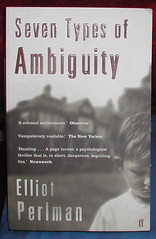
My reading has become a lot slower recently, ever since I decided it would be good for me if every alternate book was in French. By reading Seven Types of Ambiguity I haven’t increased my rate at all: it has 607 pages. I bought the book ages ago and it has been sitting sadly on my shelf waiting its turn, so what could I do?
The title is taken directly from a book of the same name by William Empson. It tells of the events leading up to and the consequences of the main character's abduction of the son of an ex-girlfriend. It describes it using seven different narrators, seven people with slightly different views on what happened, and on their relationships with each other.
Although the seven characters were very different, it was their views on the events that underlined their difference. Barbara Kingsolver uses the same technique of using multiple narrators in The Poisonwood Bible but the difference between characters there is more evident in the style of writing. Here the style is fairly consistent throughout and lends yet another aspect of ambiguity because each time the narrator is changed, it takes a while to work out who it is.
Perlman is apparently a lawyer, or has been one, which may explain the rather lengthy courtroom passages. The discussions of legal points leave me cold and remind me of other lawyers turned novelist. The only other disappointing aspect was the slight preachiness in attitude to politics in healthcare, and to Joe, his stockbroker lifestyle, and the culture of greed. For me these sections give the impression having been added in later to make sure we get the message, and seem unnecessary (described in the Guardian review "Seven Types of Moralising"). I felt Joe himslef was something of a caricature but perhaps not. I don’t think I know any stockbrokers.
The ambiguity does continue right up to the end. Normally this would bother my literal mind which likes everything to be tied up carefully, but in this case I feel I was more interested in the characters and their relationships than in the plot. There are too some passages which will remain with me for a long time:
“there is a definite warning sign for people living by themselves - the salad dressing stops appearing in the salad, then the tomatoes, then the salad itself. Then you're just left with a bowl which, sooner or later, you fill with cereal and milk and then - for the hell of it - you start to add a little scotch to the milk.”
"is it mad to love in spite of the evidence... or just necessary?"
Describing the children Simon taught: “the noisy ones, the naughty ones, the scraggly ones with one jumper and two shirts, the fast ones in runners, the pretty ones with skinny legs who followed him everywhere and the very quiet ones who still were not used to having been born”
"There is an ambiguity of human relationships, for instance. A relationship between two people, just like a sequence of words, is ambiguous if it is open to different interpretations. And if two people do have differing views about their relationship - I don't just mean about its state, I mean about its very nature - then that difference can affect the entire course of their lives."
It’s a very readable and even compulsive book. I recommend it.
Saturday, 7 July 2007
Kevin
We have an adolescent black redstart.
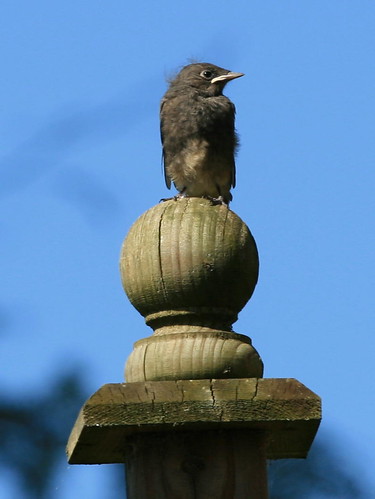
Today was the first time we noticed one of the young out of the nest.
Today was the first time we noticed one of the young out of the nest.
PhotoHunter: fake
You are walking down a steep, old, cobbled street, enjoying the ancient buildings to each side, when suddenly you glimpse something through an archway into a courtyard. At the far end you can see a man riding a horse. Could it be Charles VII? He has just caught your eye ....

Art is not what you see but what you make others see
~ Edgar Degas
Whatever deceives men seems to produce a magical enchantment.
~ Plato
Friday, 6 July 2007
A beautiful evening

Don't tell me the weather is about to improve, just as we are about to leave...

A lovely evening for a walk by the river.
Wednesday, 4 July 2007
Cité Royale de Loches

I like Loches. It's manageable, not too large and not too busy. These pictures were taken on 19 June 2007 at about mid-day.

We've bypassed Loches many, many times on our way somewhere or other. Although our route normally does flit through some of the older parts, much of it resembles the bypass round Basingstoke. We've always noticed the signs to the mediaeval centre and this time we managed to follow them.
 The gate to the chateau: the Porte Royale, leading to the extensive grounds containing the church, the Eglise St-Ours with a beautiful carved entrance and stained glass windows.


The Logis Royale is the place that Jeanne d'Arc persuaded the Dauphin to be crowned king, Charles VII. It has some beautiful tapestries and fireplaces but not much furniture.


You can then walk between some lovely old houses to the Donjon.


Inside the donjon was rather dank, but then it has been a dank summer. It does have a lovely little mediaeval garden.
As they say, it was worth the detour.
Subscribe to:
Posts (Atom)
LinkWithin
