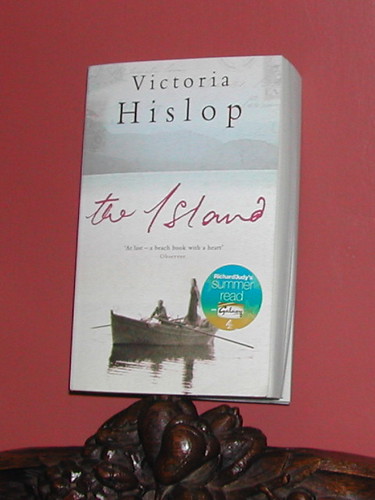
 I had no idea what this was about before I started on it, but it had been voted as the next book to read for our book club. I took a dislike to the cover straight away because it reminded me of "The State of the Union" by Douglas Kennedy which I thought was very superficial.
I was right.
It could so easily have been a comment on attitudes to diseases perceived to be both shameful and deadly but, as it was, it was lightweight and unbelievable. Karonga, where we first lived in Nyasaland, is now a research centre for leprosy, so the subject is of real interest to me. There are some parallels between attitudes to leprosy and HIV/Aids : stigma and discrimination are problems for both.
There was nothing convincing or plausible about the characters. They were either incredibly (nauseatingly?) good, or bad. I certainly didn’t like the characterisation of Maria and Anna: good woman, quiet, retiring and wanting to please, “hands held softly in her lap in a demure pose”; bad woman, high spirited, questioning, “mischief in her eyes and lips that didn’t smile”, “had her arms folded and glared …” I definitely preferred Anna who had a bit of spirit!
Worth noting too, was the immense difference between this description of the occupation by the Germans during WWII and that in Suite Française, especially so as I have so recently read Suite Française, but although that was a few books ago, I remember it more vividly. Another opportunity missed.
It's a shame, but I really didn't find it an enjoyable book in any way. The worst of it is that, reading the reviews in advance, you would have no idea. Where on earth are you supposed to find an honest opinion?
I'm hoping to get hold of a copy of Moloka'i by Alan Brennert which has a very similar theme though set in Honolulu. It has only two reviews on Amazon but both are good. It will be intersting to see how it compares.