Wednesday, 28 February 2007

Female genital mutilation (FGM)

The majority, though not all, of the references are to The Lancet which requires (free) registration.

While the debates rage about patriarchy and people apportion blame, we sometimes seem to forget the individual who has suffered.

The immediate consequences of FGM can be any combination of the following:
  • severe pain,
  • shock,
  • haemorrhage,
  • infection.
Longer term problems are likely to be:
  • chronic pelvic infection,
  • chronic urinary tract infections,
  • pain,
  • cysts,
  • psychological problems,
  • sexual problems,
  • infertility and
  • obstetric complications for both mother and infant.

The WHO has recently completed a large study into the obstetric outcome for women who have undergone FGM. It has shown that there is a significant risk that the baby will be stillborn or will need resuscitation.

In order to combat the practice it isn't sufficient to address just a single issue. Intervention has to happen on a number of different fronts in order to combat this assault on women as soon as possible. Addressing women's rights alone will just take too long. And the most important avenue has to be basic education: hygiene, health etc - including women's rights. The effect that fertility is adversely affected by FGM and that there are detrimental consequences on the newborn baby is very important in traditional societies and these points should be made widely known. Encouragement of those who are already opposed to the practice, enlisting the help of local leaders, development of alternative rites of passage ceremonies - all can help.

What has been shown not to help has been the provision of alternative livelihoods to the providers, criminalisation or the medicalisation of the procedure.

We also need to recognise that it isn't solely a problem for the developing world. Migrants, refugees and asylum seekers have brought the problem to the developed world. According to the 2000 United States census, 881,300 African migrants come from countries where FGM/C is widely practiced. It is estimated that as many as 3,000 to 4,000 girls are "cut" every year in the UK. A clinic set up in Guy's and St Thomas', London, found that acute and chronic physical complications were present in 86% of women with type III genital mutilation.

There is still a long way to go, so every possible approach should be used including, of course, addressing women's rights.

Tuesday, 27 February 2007

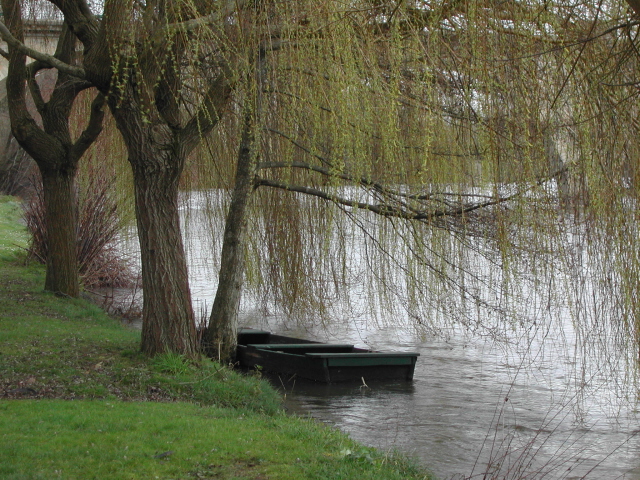
Willows by the river

willow

Willows and catkins
at the end of our garden:
they still make me sneeze

Sunday, 25 February 2007

Female circumcision

.... or genital mutilation.

So often people think it's a problem for developing countries but it's equally a problem in the developed world. Please have a look at this blog from a French woman, called My Path to Renewal. If you don't read French I have translated it here, but I am no translator or writer, so please make allowances. It's one thing reading and understanding, another when you try to find appropriate words in English. Nevertheless, it makes a moving account of an awful situation.

It's worth bearing in mind that there are other people with other problems when we are so ready to complain. It puts things into perspective.

Saturday, 24 February 2007

Seduced [if you're over 18]

Here's one for you figleaf!


The Barbican in London this autumn is having an exhibition of art and sex from antiquity to the present. Not to be missed!

Curated by scholars Marina Wallace, Martin Kemp and Joanne Bernstein, Seduced aims to generate a lively public debate about shifting attitudes towards explicit imagery, and to question the lines drawn between art and pornography.

It runs from 12 October 2007 - 27 January 2008. Entry to visitors aged 18 and above only.

Growing old gracefully?

I don’t watch a great deal of television but yesterday I happened to see The Weakest Link because I was too lazy to do something else until the next programme started.

For those who aren’t familiar with the programme, the contestants introduce themselves, saying their name, where they are from and how old they are. I’ve often wondered about that last item. How relevant is it and do people find that a problem? Do people tell the truth?

Well, there last night was this attractive woman who said she was 50. After a suitable pause, Anne Robinson asked “And how many times have you been 50?” Various shrieks and protestations followed, but I don’t think we ever got to the final answer though it was obvious she was more than 53 (and that after a protracted effort to remember her date of birth).

So on the one hand we had an most pleasant 50-something woman and on the other we had Anne Robinson who is apparently 60-something but, thanks to the expertise of medical science, looks younger by the day. Frankly I thought the contestant looked better.

I’ve met three people in person who have had facelifts. Two of them are only assumptions, but what else can have given them the look of wearing a mask? One was a famous British author and the other a director of a very large firm, so they weren’t short of a penny or two i.e. you could assume they went for the best available.

The third was the English wife of a Frenchman. He apparently told her that it was time she was thinking about a facelift. My jaw dropped. I couldn’t think of anything polite to say.

Strangely, my husband, not normally afraid to voice an opinion, has never suggested that…..

PhotoHunter: Soft

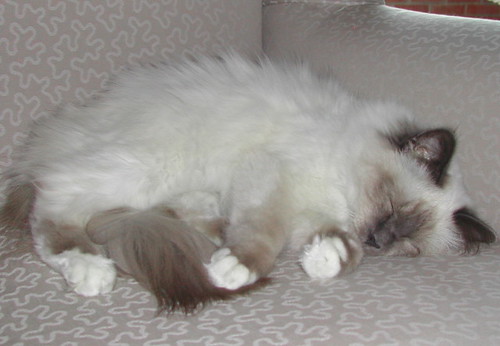
So here he is, my entry this week. His fur is soft as silk and he's a big softy!

This is his favourite place to sleep at the moment. I think he feels the colour scheme suits him.

Friday, 23 February 2007

Are you ready for so much pleasure? French condom advertisement.

The Lancet has been running a series called Sexual and Reproductive Health over several months. In the issue 2 December there was an article “Promoting protection and pleasure: amplifying the effectiveness of barriers against sexually transmitted infections and pregnancy”, unfortunately subscription only.

It’s generally accepted that the increased use of condoms is a essential as HIV/AIDS and other sexually transmitted infections spread. Rather than stressing the negative aspects of lack of use, health campaigners are changing tack and promoting pleasure in using of male and female condoms - alongside safer sex messages – hoping that this will lead to an increase in use. The perception of a decrease in sexual pleasure was found, in a 14 country study, to be the main barrier against use.

The authors say

Since pursuit of pleasure is one of the main reasons that people have sex, this factor must be addressed when motivating people to use condoms and participate in safer sexual behaviour. Although enjoyment - and even sex itself - has been noticeably absent from much of the dialogue surroundingSTI and the spread of HIV, increasing evidence shows the importance ofcondom promotion that includes a combination of pleasure-based and safer sex messages.


There was a press release from the Pleasure Project to publicise the report. It seems that the efforts are largely aimed at the developing world but not exclusively. More about the Pleasure Project here .

In France there has been a television ad to promote exactly this subject. I can’t imagine it being shown in the UK: even in France it was considered unsuitable to be shown before, I think, 10:30 pm. Not for the faint-hearted and definitely NSFW, but I thought it was very, very good. For the most part you don't need to understand French.

Update: the Manix site no longer shows the ad, but it is on YouTube - Pub Manix. The part where the couple are going down the escalator still makes me collapse with laughter.

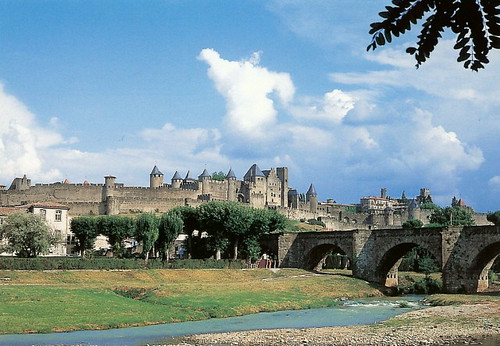
Carcassonne


We visited Carcassonne on the way back from leaving the potentially rabid cat with our son, while we returned to England. It is a most spectacular sight which we had spotted from the autoroute as we drove past on previous visits to said son, so we had it all planned out.

We relied totally on satellite navigation for the first time. Not a good idea. What we hadn’t realised was that the hotel was in the historic centre of la cité. After, um, a spirited discussion as to why Gladys was taking us this way, we found we had to be allowed through a barrier to cross the old bridge through some outer fortifications and it was narrow, narrow, narrow.

There were some further obstacles to overcome though: we couldn’t find the hotel – nobody told us it was in two parts; we (I say charitably) had booked for the wrong night; the car park was down a number of other narrow-to-vanishing-point lanes (with bollards at strategic positions); the room, although very pleasant, had a beam going through it at knee height. Very quaint but no nocturnal perambulations for us. By this time we were barely on speaking terms.

But it is a glorious place. If it hadn’t been so damnably cold I could have wandered about for hours on end. But then of course if it hadn’t been so damnably cold, it would have been packed with damnable tourists, just like ourseves.

Official site

Thursday, 22 February 2007

The Island by Victoria Hislop - a question

Why are so many people searching for this at the moment? My earlier review is being bombarded by hits but no-one ever stays for more than a second or two.

Parking permit equality

When I was working at our large and growing hospital I had parking permit, living as I did then deep in the countryside with no public transport. After a couple of years the parking became so congested that the hospital investigated remote parking sites with regular shuttle services during peak times, on demand out of hours.

It wasn’t particularly inconvenient and I appreciated that the doctors and nurses needed to be given priority. However I started to notice that the only man ever on the bus was the driver. On one occasion I had to go to the parking office and mentioned this to the person in charge. I asked if men were more adept at finding reasons to park on site. They certainly were in our department: walking distance didn't count for anything. “Oh no,” was the reply, “it’s just that men are in the more senior jobs”.

Plus ça change …

Wednesday, 21 February 2007

Granny wasn't always good

I was brought up in a rather puritan home which was very much under my mother’s influence. I was the elder of two girls and she struggled to let me grow up in any way. I always maintained my sister had an easier time of it: by the time she came along our mother's barriers had been worn down a little by my battles. I was the bad one, the black sheep. I had to fight for everything, any clothes that could be described as grown up, wearing make-up of any sort, going out with boys. Even my reading was watched over.

Part of the problem no doubt was that we were largely brought up in fairly remote parts of Africa where there were often few other people, let alone children (I feel a Poisonwood Bible review coming on!). Communications weren't then what they are now. There were no fashions to lead us. It when we returned to Europe that the problems started, when we children realised how far behind the times we were while it seemed to make little or no impact on our parents.

But that wasn’t the whole story. My mother was born not long after the first world war in a town a fair distance away from her family’s home town. The date announced to, and subsequently celebrated by the family was two months later than the actual date appearing on her birth certificate.

Obviously nowadays this wouldn’t cause the least bit of embarrassment but for my mother as a child in the 20s it must have been painful. I know there was one particularly bad occasion when the school authorities accused her of lying. That was when she first found out she had “official” birthday which was different from the one she believed. It continues to be painful whenever she has to explain; it still happens from time to time.

Her Italian father disappeared from her life when she was about six months old. The story goes that he died but I gather he had been trying to persuade my grandmother to return to Italy with him. She refused, wanting to stay with her family. I suspect he went back to Italy alone.

But my mother’s anxieties didn’t stop there. My grandmother never remarried and went to work to support her daughter, which meant my mother being left for long periods. I know she felt very lonely. Then grandmother started an affair with her boss which was to last many years. He provided for them both by buying her a small business of her own, paying for schooling. It caused huge resentment within his own family needless to say, and to this day my mother feels some sort of obligation to them. Bear in mind this was the 1920s. It was a racy style of life for those days.

No doubt the pendulum swing helps to explain why she was so very rigid and conservative in her views on what we were or were not allowed to do. It didn’t help though, when I was the odd one out at school and it left me feeling awkward for a very long time. Still does to some extent.

Tuesday, 20 February 2007

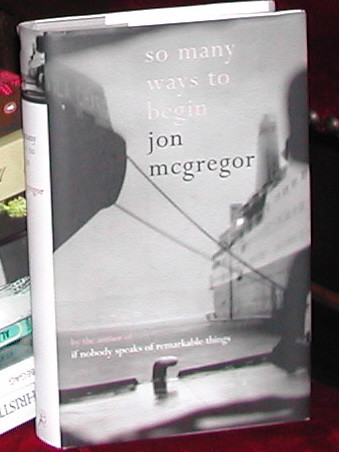
So Many Ways to Begin by Jon McGregor


I must recommend So Many Ways to Begin wholeheartedly even though I still have a slight preference for Jon McGregor’s earlier book. I read the two books one after the other, which was perhaps a mistake, but I couldn’t wait!

It is a warm and gentle story, essentially one of memories, relationships and disappointments. David Carter is a museum curator, something he has wanted to be from a small child (parallels with the boy who catalogued all the mundane objects he found in "If Nobody speaks of Remarkable things"?).
The plot is developed in a potentially chaotic way, going backwards and forwards in time, with each chapter being introduced by the description of an object from David Carter’s private collection, gradually building up a picture of his family and his life from the fragments. I was never left confused though. The language is beautiful and the descriptions are fantastic – lovely attention to detail.

One thing did strike me and that was that David’s reaction to the fact that he was adopted made me feel uncomfortable. He appeared to reject his adoptive mother without any attempt to understand her feelings, in a callous and heartless way and became totally consumed by the need to find his biological mother. It almost didn’t fit with his handling of his wife’s depression which he seemed to manage much more patiently and lovingly. On the other hand I have no idea how I would react under the same circumstances.

From the Bloomsbury site a quote from Jon McGregor about how his grandparents’ marriages were one of the influences in the book:

“I was struck by the strength of their marriages, and by what an achievement this had been. A quiet triumph, really, to have gone through everything they’d been through — war, separation, illness, old age, and to have maintained and nurtured their relationships through it all. This book is not ‘about’ them in any direct sense; their stories are not in the book, and neither are their characters. But their stories did inspire me to explore, and to celebrate, the quiet triumph of a long and sustained relationship.”


I like that. I can do that.

Euphemisms

On BookCrossing recently there has been a mild debate on the censorship, as reported in the New York Times, imposed on a new book by some school librarians because it uses the word “scrotum”. The book has won this year’s Newbery Medal. Amazingly one of the contributors said that she (I have to assume it’s a she) that using the word would make her “want to put the book down, because honestly, it's gross”. Since the NYT article, Gelf Magazine has found a number of other books for young readers using that awful word. Will they be banned too?

I just don’t see how people can make such a fuss over the name of a body part. It reminds me of a very funny post, “Vagina! Vagina! Vagina!” in a blog by a junior psychiatrist, which I imagine you could guess, complains about euphemisms for vagina. Some of the comments are equally funny. Similarly NHS Blog Doctor, although not totally in favour of medical terms being used by children, nevertheless attempts to introduce one to his daughter.

What euphemism would they find acceptable for scrotum I wonder?

Monday, 19 February 2007

I started young


This is a letter written by my grandmother to my mother saying "she [meaning me] seems to have a liking for books." I was two years old at the time.


That liking has lasted a good few years now!

(I suppose I could have used this for the PhotoHunter antique category. What an awful thought.)

Sunday, 18 February 2007

PhotoHunter: Antique

I have only today found PhotoHunter so I have had to produce this without any preparation. I'll try to keep at least one step ahead in future!

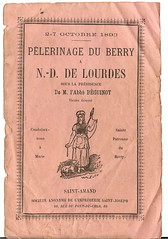
1893

This is a photo of the oldest dated object I could find.

When we moved into this house we found all sorts of things, including a small box with letters, driving licences, hunting permits and several of these religious booklets. In the main they date from the time of World War II. I feel they belong to the house, and not to us, but I'd like to find a way of preserving/displaying them.

Saturday, 17 February 2007

I am from

I am from everywhere and nowhere, full of wanderlust.

I am from warm sunshine on my back, dry grass and bush fires. I am from white mosquito nets billowing in the evening breeze. I am from the scent of dry earth as the first rains fall, from the green blades of new grass a few days later. I am from ripe mangoes and guavas dropping from the trees.

I am from gentle mists and green hills, lilting voices and music, peat fires. I am from a land of poets and artists.

I am from winding lanes and tall, unkempt hedges, thatched cottages and orchards, from watching hens hatching their chicks. I am from baking cakes for small boys playing in the trees.

I am from a cathedral city. I am from hustle and bustle and traffic and noise, and peaceful ancient buildings.

I am from a wide, gentle river and rural landscapes and the chatter of a language not wholly familiar.

I am from a father who always had time to talk, to encourage my enthusiasms and share his.
I am from a mother who grows old denying her origins.
I am from desks in studies, journals and books, bookshelves and libraries. I am from learning and information and searching for knowledge.

I am from the Internet. I am from everywhere.

Where are you from?

This is an idea from Charlotte's Web and an immediate reply to her final question. I think it could change depending on the mood I'm in at the time.

Friday, 16 February 2007

My helper

He's such an affectionate little fellow, eight months old. He likes to snuggle up close and be able to touch someone. Note the position of the left foreleg - it can cause havoc and frequently does. Any strange messages from me, it's his fault! A friend did point out that if he thinks the keyboard is attached to me, it tells you that I have a bit of a problem.

Thursday, 15 February 2007

Conscientious objection in medicine, or paternalism

I came across a paper in the New England Journal of Medicine entitled Religion, Conscience, and Controversial Clinical Practices. The essence of it was that a survey was carried out on a random selection of doctors in the USA and it was found that many don’t feel an obligation to let their patients know about treatments which are legal but which they find morally wrong, nor do they feel they need refer them on to another doctor who may not have such views. The article asks whether it is right that doctors should refuse any information to their patients, to discuss it, or to refer them on, and where should the balance lie between the patients rights and the rights of healthcare providers not to have to carry out practices against their principles.

I remember when I was a student it was generally known not to go to such and such doctor at the university because she was Catholic and absolutely refused to prescribe contraceptives. I also remember being sent away from a family planning clinic of all places and being told not to come back until I had had a baby! Why did she think I had gone there in the first place? Because I didn’t know how to do it? She thought it was time, after 4 years of marriage, that I should have a child. I managed to hang on there for another three years, having found a different clinic in the meantime.

As a result of those relatively trivial experiences (though they didn’t feel like it at the time), on reading the paper I immediately thought that it was totally unjustifiable for a doctor to withhold treatment and/or information for any reason.

Reading further I found this article in the BMJ where the conclusions are

"Values are important parts of our lives. But values and conscience have different roles in public and private life. They should influence discussion on what kind of health system to deliver. But they should not influence the care an individual doctor offers to his or her patient. The door to "value-driven medicine" is a door to a Pandora's box of idiosyncratic, bigoted, discriminatory medicine. Public servants must act in the public interest, not their own."

It seems a reasonable view until you read one of the responses wondering whether he would have been able to have been a conscientious objector in Nazi Germany or Stalinist Russia. Then today I read NHS Blog Doctor: The extended role of the Health Care Professional which did make me think yet again. It really isn’t easy.

Contraceptive Awareness Week

It's contraceptive awareness week in the UK. How many people know that? I happened upon it by following up an article in the Guardian somewhat by accident. You’d think they’d try a bit harder at the awareness.

Two surveys have been published to coincide with this event.

Schering Health Care surveyed 1020 women. Some of the figures are fairly staggering - 12% of women aged 26-34 have had an abortion; 20% of these had not been using contraception and 27% had forgotten to take their contraceptive pill. 30% have gone through with an unplanned pregnancy whilst in a long term relationship; 41% of these were not using any form of contraception at the time, and a further 29% had forgotten to take their pill. Well all right, in a long term relationship they possibly weren’t as concerned as they would have been otherwise, but it’s still bad.

Although nowhere like as bad as the Glasgow study which found that approximately 50% of women were using no contraception, the conclusion was similar: that there is a need for better contraceptive education. Schering, who produce long-acting reversible contraceptives, of course are not unbiased.

At the same time, the FPA published a survey to highlight other sex education issues. They surveryed 495 people over 18. Did this include 70 year olds? And what was the weighting “applied to the data to bring it into line with national profiles”?

I have to say I took the quiz and found a couple of the questions tricky so I’m not surprised that some of the results were poor. Again though, the results do highlight the need for better education. That 29% could think that jumping up and down, douching or urinating could prevent pregnancy is unbelievable (with the proviso that I don’t think the question was well phrased).

Monday, 12 February 2007

Another journey

The flight was delayed. As I passed through yet another security control, showing yet again all my flight documents and passport, I remembered when I was travelling as a child, two nuns boarded the plane in front of me. They showed their boarding passes to the flight attendant who, fortunately, noticed that they were boarding the wrong plane. Surely that couldn’t happen these days.

Coincidentally there was a nun on my flight yesterday. She was one of the last to go through the gate and as the flight was pretty much full, she and her companion were left standing. It was interesting in two ways. First, I haven’t seen a nun out and about for I don’t know how long, and secondly if that had been in the Ireland of my youth, dozens of people would have leaped to their feet to offer her a seat.

I was left contemplating whether there are fewer nuns about even in largely Catholic countries (I think the answer is probably yes), and also whether they are even there less respected than they were (no doubt the same answer).

Well, such lofty deliberations kept my mind off the fact that he was pulled over for speeding on the way back from collecting me from the airport. And I didn’t once say “I told you so”, though my tongue is now red raw. The most charming gendarme helped ease the pain too.

Wednesday, 7 February 2007

Wearing purple, or what?


When is it that you cross the line from middle-age to elderly? I cannot, cannot, cannot accept that I could be described as elderly, but I do remember my horror when a doctor referred to a 37 year old patient as middle aged: I was 37 at the time. It must be getting close.

As a woman you seem to become invisible as you grow older. For the second time in two days a man assumed I was not the person in charge. The first said he had an appointment to see someone called {my name}, and to be fair, when I said that I was that person, he hardly missed a beat as he said hello. His eyebrows shot up though. The second addressed all his remarks to the young man standing behind me when explaining why all our systems were down.

How sad it is though, that anyone feels they have to have cosmetic surgery to be attractive (and/or employable). If you have a facelift, you don’t look younger, you look like someone who has had a facelift. You *can* be older and beautiful but in order to be beautiful you have to be real. Surely your face, your body tell a story, the story of your life. Your beauty should come from your personality, character and, yes, sensuality. When you’re my age you're pretty much expected to be asexual as well as invisible. Can’t people accept the idea of an older woman as a sexual being. Why ever not? They seem rather better at that in France. Article in French.

One alternative which almost has some attraction is to grow old disgracefully. The first couple of lines of the poem by Jenny Joseph quite appeal on first sight: “When I am an old woman I shall wear purple with a red hat which doesn’t go” but on reading the rest of the poem I’m not so sure. It just seems very sad. Are we all so repressed that we think these are outrageous ways of demonstrating freedom? Are there not better ways?
When I am an old woman I shall wear purple
With a red hat which doesn't go, and doesn't suit me.
And I shall spend my pension on brandy and summer gloves
And satin sandals, and say we've no money for butter.
I shall sit down on the pavement when I'm tired
And gobble up samples in shops and press alarm bells
And run my stick along the public railings
And make up for the sobriety of my youth.
I shall go out in my slippers in the rain
And pick the flowers in other people's gardens ...
You can wear terrible shirts and grow more fat
And eat three pounds of sausages at a go
Or only bread and pickle for a week
And hoard pens and pencils and beermats and things in boxes.

I’m determined to steer my own route and grow old in my own fashion, and I’m lucky enough to have a man who likes me the way I am.

Sunday, 4 February 2007

Travelling light

I've said that I always wanted straight hair (preferably blond and long). I've always wanted to be taller too. On days like today, when I'm trying to pack all my needs for a week into a tiny little bag, I'm glad I'm not taller. At least I have a chance of fitting things in.

It's all wishful thinking really- this campaign for real beauty puts all those ideas of how I should look into perspective.

Saturday, 3 February 2007

Eating out

We were invited by good friends to be their guests for dinner at a small bar in the country. We had heard them speak about it often enough so we were delighted. We had to phone in advance to sort out a menu because there would be no choice. Our friends drove: we would never have found the way. This was deep in rural France.

We arrived at a somewhat (very) shabby building. No sign there was a restaurant inside, but a Peleforth sign indicated the bar. Twenty or so rusting mouli-legumes were hanging high in the porch, with a light bulb in each handle. They weren’t lit.

It was like walking into another world, another century even. Two men of indeterminate age were leaning on the bar in the faded blue overalls you see everywhere in the countryside. They barely acknowledged our presence. A log fire burned at the other end of the room. The tables and chairs were Formica or something similar. The draught excluder round the window was sticky tape, or perhaps it was holding the window shut. I would have turned around and walked out if we had happened upon the place.

The food however was divine. Good, simple, French country cooking. The local food.

Which brings me to my point. Our younger son and his partner have been in India for the last few weeks. They phoned us from a restaurant, I can’t remember why, something to do with the time difference. Our whole family loves Indian food (most food really) so we asked what they were eating.

Spaghetti bolognaise.

OK …………. fine.

To be fair, I do remember doing something similar when I couldn’t face another mussel in Brussels.

Friday, 2 February 2007

Teenage pregnancy


I spent what felt like years, but was probably only two plus several bits, studying part-time for a further degree in health psychology. It was very relevant to the job I was doing at the time and it's a subject that fascinates me.

One particular aspect which interests me is reproductive health so when I spotted two blogs, first The Well-Timed Period: Who Doesn't Use Birth Control and then figleaf (note: adult content with some very thought provoking posts), had picked up on a BBC report “Teenage pregnancy myth dismissed” - I delved a bit further. So far in fact that I ended up emailing the authors and they very kindly sent me a copy of the original paper.

The main finding is that “older women” are as irresponsible as teenagers about contraception, with around 50% not having used contraceptives at all. I’m not disputing their findings an any way – far from it. It’s just that I would have liked more information. I think there probably is quite a lot more to be tweaked out of the data.

I have difficulty in understanding why the researchers made a division of the population into teenagers and not-teenagers. What happens when they are 20? Are they expected to change their attitudes suddenly? I don’t know why they did that, and especially when you see that the mean age of the so-called older women was 28. There must have been a much greater number in their twenties than in their thirties or forties (the range was 20 – 46). It would have been interesting to see those age groups separately, if not the raw data. It might show more in the way of trends.

Given that teenagers were expected to be more irresponsible, and that there have been a number of government initiatives since 1999 trying to combat teenage pregnancies, it could be the sex education has worked to some extent. Teenagers are now no worse than other age groups.

The results are dire however. I have to say in the case of this research and where it was carried out, social problems will have had a very large influence. It is an area of high unemployment, overcrowded housing, and so on.


LinkWithin

Blog Widget by LinkWithin